

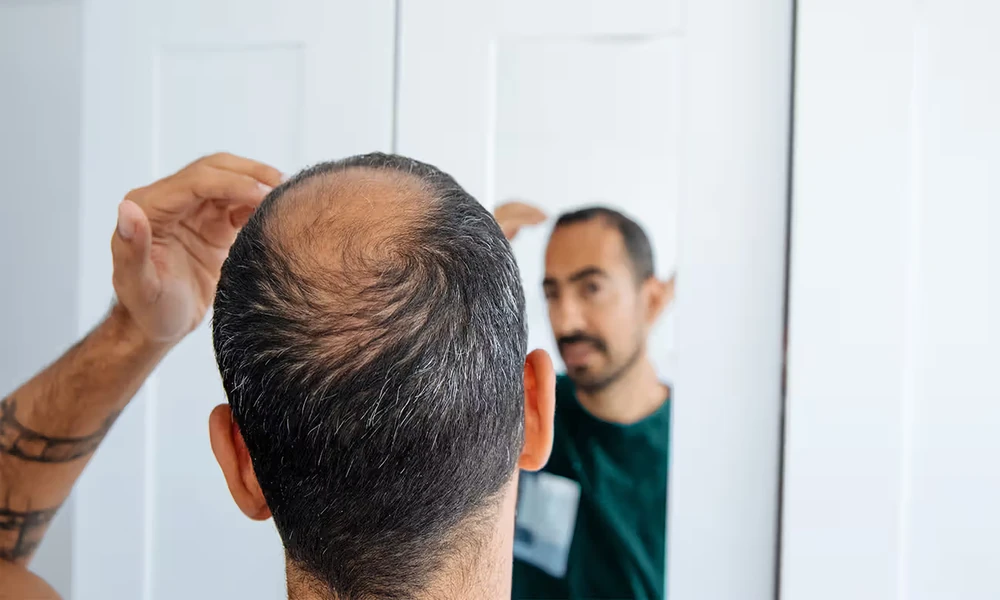
Losing your hair in your twenties or thirties is, for a lot of men, one of those things nobody really prepares you for. You notice it gradually, but before long you’re spending too long in front of the bathroom mirror trying to work out if the light is weird or if your hairline has really moved back another centimetre.
Male pattern baldness – androgenetic alopecia – affects around half of men by the time they’re fifty. It’s caused by a hormone called DHT, that binds to the hair follicles and causes them to shrink over time until they stop producing hair altogether. The process is slow, which is partly why so many men catch it late, and partly why the idea of doing something about it early enough to make a difference still hasn’t quite filtered through to mainstream conversation.
Why Most Blokes Still Don’t Know What Actually Works
The hair loss industry is genuinely strange. It’s full of shampoos making vague claims, supplements with ingredient lists that sound impressive but have very little research behind them, and various devices that cost a fortune and deliver results that are, let’s say, modest. Meanwhile, the treatments that do have proper clinical evidence tend to get less airtime, possibly because they’re not particularly exciting to market.
Minoxidil, a topical solution applied directly to the scalp, is one of the better-known options. It increases blood flow to the follicles and can slow loss or prompt some regrowth, though it works better for some men than others and needs to be used indefinitely for the effects to hold. The other main treatment with real evidence behind it is oral medication, which works at the hormonal level rather than topically.
Finasteride 1mg is a prescription tablet that works by blocking the enzyme responsible for converting testosterone into DHT. Less DHT means less follicle damage over time, which for a lot of men translates to slowed hair loss and, in some cases, a degree of regrowth, particularly around the crown. Clinical trials have consistently shown it to be effective, with studies over five years showing that the majority of men who take it either stop losing hair or see visible improvement. That’s not a trivial result.
What People Don’t Tell You Before You Start
The honest answer is that it takes time. Most men don’t see meaningful changes for at least three to six months, and some don’t notice much until closer to a year in. There’s also a phenomenon sometimes called a “shed” in the early weeks, where hair loss seems to temporarily increase before it stabilises, which can be alarming if you’re not expecting it.
Side effects are the thing that puts a lot of men off before they’ve even had a proper conversation with a doctor. The most common ones are sexual side effects, including reduced libido or changes to ejaculation, which occur in a minority of users – around 2% based on trial data – though some researchers argue real-world numbers are higher. For most men that experience them, they resolve when the medication is stopped. It’s genuinely worth discussing this with a GP or through a reputable online clinic rather than either dismissing the concern or writing off the treatment entirely based on forum posts.
There’s no shame in wanting to keep your hair, by the way. The cultural narrative that men should just accept hair loss gracefully is a bit tiresome when actual treatments exist. Some men genuinely don’t mind going bald, and that’s completely fine. But for men who do mind, especially those who catch it early enough, doing nothing is a choice too, just not always a conscious one.
Getting Access to It in the UK
Finasteride is prescription-only in the UK, so you can’t just pick it up at a pharmacy. Your GP can prescribe it, though some are reluctant to do so for cosmetic reasons, which leaves a lot of men turning to regulated online clinics that offer video or written consultations before issuing a prescription. Provided the clinic is registered with the Care Quality Commission and prescribes through a legitimate pharmacy, this is a perfectly legal and reasonable route.
If you do go down that path, look for clinics that ask detailed questions about your health history and don’t just rubber-stamp every request. The consultation process matters, even if it feels like a formality.
