

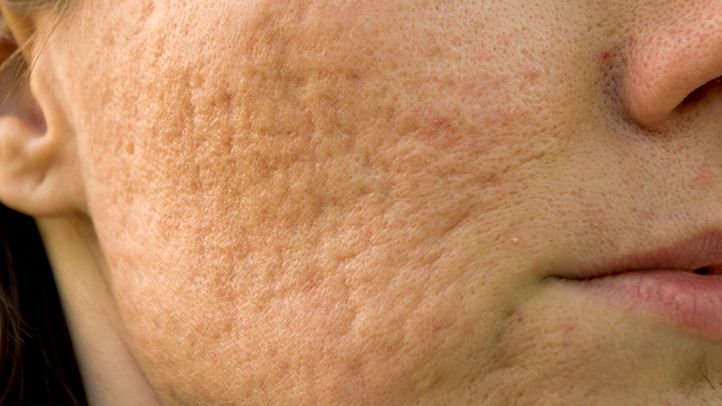
If you have acne scars, you do not have to worry. There are aesthetic clinics in Singapore that focus on treating acne scars to remove your previous acne bumps and allow you to have your best look. They utilize effective and safe procedures to handle acne scars, such as chemical peels, laser treatments, fillers, and other non-invasive skin treatments. Before you undergo acne scar treatments, it is vital to have your acne under control so there’s no way new acne scars could form.
What Are The Types Of Acne Scars On The Face?
Atrophic Scars
Atrophic scars are shallow, flat depressions beneath the top skin layer. These acne scars are mostly due to serious cystic acne. The manifestation of atrophic acne scars could differ based on an individual’s past with acne. There are three atrophic scar types:
Boxcar Scars
Boxcar scars are wide, often box-like depressions with very defined edges. Boxcar scars are due to chickenpox, varicella, or widespread acne, a virus causing an itchy, red rash with blisters.
Boxcar scars usually form on regions such as the lower jaw and cheeks, where skin is very thick.
Ice Pick Scars
Ice pick scars are more narrow, smaller indentations that point down towards the surface of our skin. These scars are normally located on our cheeks.
Rolling Scars
Rolling scars differ in-depth, with sloping edges that cause the skin to seem uneven and wavy.
Acne Scar Treatment Options
Having acne scars could reduce self-confidence and make social events harder to enjoy. Aesthetic clinics in Singapore could deal with various acne scar types, like boxcar, icepick, keloid, and rolling through the following ways:
Fractional Laser Resurfacing
Fractional Laser Resurfacing is an acne scar treatment that is non-invasive and non-ablative. It offers collagen rejuvenation and skin resurfacing to make the texture of the skin relatively smoother. The procedure involves a laser that permeates deep beneath the skin to restore huge imperfections and enhance even serious damage. Fractional laser resurfacing is less invasive than different techniques and has a shorter recovery period while still providing plumper, smoother skin. This acne scar healing approach is safe to use on all skin tones, and it may effectively heal both new and old acne scars (and sun damage wrinkles, fine lines, stretch marks, surgical scars, and more!)
Microneedling
Microneedling is a non-invasive, non-surgical technique. Because it encourages the creation of collagen, this efficient acne scar removal procedure is also called collagen induction treatment. Microneedling improves the elasticity of the skin and reduces fine lines, acne scars, deep wrinkles, stretch marks, surgical scars, and other skin imperfections. This therapy may be used on almost any part of the body and is suitable for males and females who want smoother, youthful skin.
Dermal Fillers
Since it involves a set of injections with multiple kinds of fillers, healing acne scars by dermal fillers is a non-surgical cosmetic surgery. Even though some dermal fillers require a couple of months to show effects, the effects of these cosmetic injectables may be seen right away. Dermal fillers can stimulate increased collagen formation as time passes by, which will aid in the healing of these depressed wounds.
Which Treatment is Right for You?
The nature and severity of your scars will usually decide which treatment method is most successful for you.
Microneedling, for example, is a collagen-stimulating procedure that won’t help people with elevated scars caused by an overabundance of collagen. Treatments designed to fill up the gaps created by depressed scarring will not work on elevated scars. When speaking with a cosmetic doctor about potential treatment choices, one of the initial things they will need to look at is the scarring type you have.
